
Springs, cables and balance
The most common phone-us-now fault in Wallsend is a spring letting go. It sounds like something hit the roof, and afterwards the door either won't lift or feels like it weighs a tonne, because it does. The spring was carrying that weight for you.
A torsion spring is rated in cycles, one open-and-close at a time, and the doors on the old grid east of Nelson Street have been cycling since before some of their owners were born. We replace springs and cables, re-tension the system, and check the balance so the opener isn't hauling dead weight, which is what quietly kills motors.
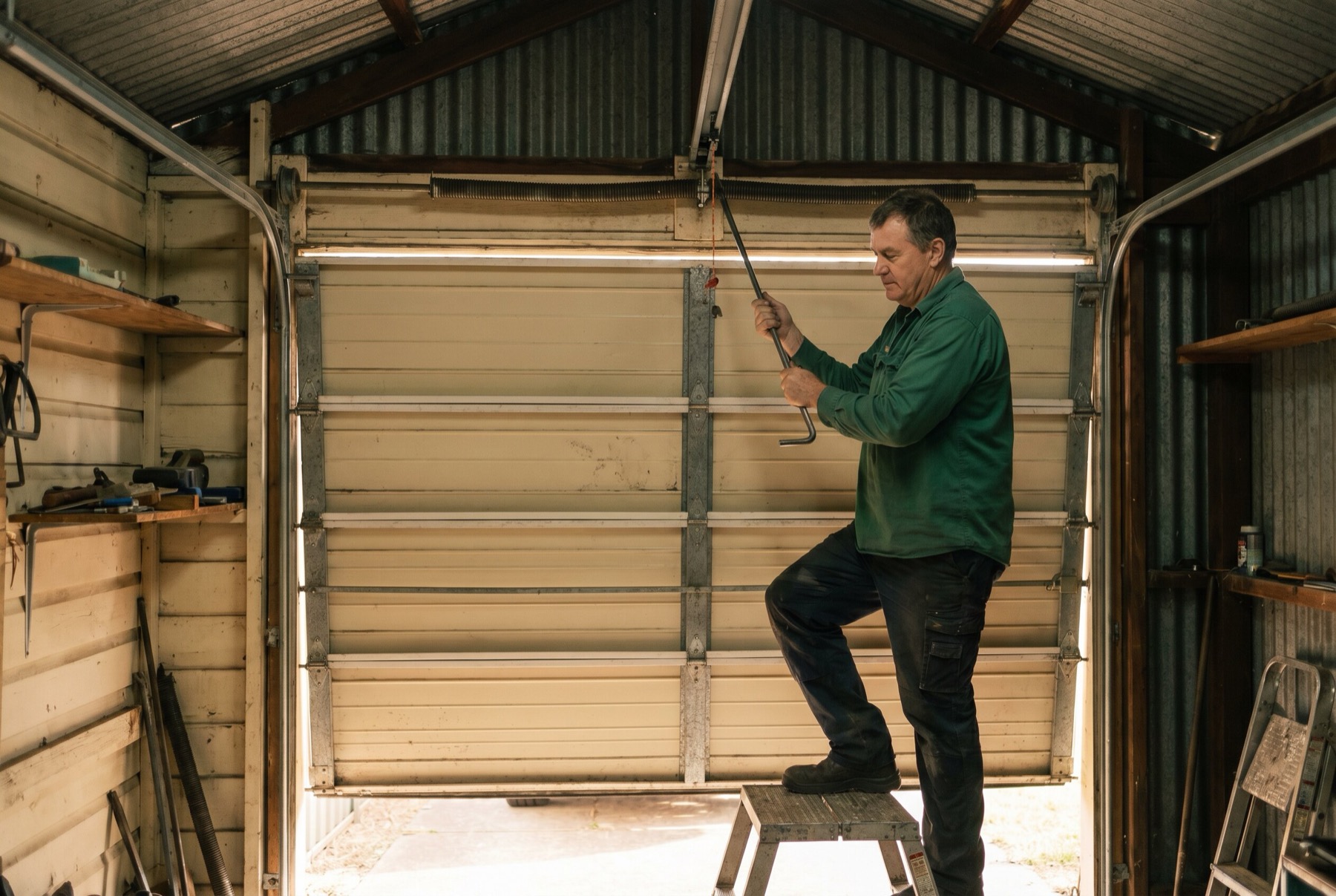
Worth knowing: a snapped spring is under stored tension even after it fails. Don't pull the red release cord and try to lift a heavy door by hand, and keep the car inside until it's been looked at. A trapped car is annoying. A dropped door is worse.
Off the track
Doors come off their tracks for honest reasons: a roller that's worn through, a track knocked out of line by a car bumper, hinges working loose after years of vibration. The door sits crooked, binds halfway, or jams solid.
We put the door back on its rails, straighten or replace bent track, swap tired rollers and hinges, and then run it through its travel until it moves level again. If the panels themselves have been damaged in the process, we'll tell you whether a panel swap makes sense or whether the door is telling you something bigger.
Seals, bottom rails and storm water
This one is a Wallsend speciality, and not by choice. When Ironbark Creek backs up through the town centre, storm water goes wherever it likes, and under garage doors is one of its favourite places. The damage shows up slowly: a bottom rail rusting from the inside, a base seal gone brittle, grit worked into tracks and spring hardware.
We replace base seals and weather strips, treat or replace rusted bottom sections where they can be saved, and give you the straight word when they can't. If your street saw water in any of the big wets, it's worth having the bottom of the door looked at before the next one.
There's a longer, honest write-up in our guide: what storm water actually does to a garage door.
Roller door service
The roller door is the old grid's workhorse. Half the single garages between here and West Wallsend have one, and most have never been serviced. They get loud, they get heavy, they start catching in the guides, and one day the spring inside the drum gives up.
A service is re-tensioning, new guides and felt where needed, a new bottom seal, and lubrication in the right places rather than everywhere. An honest service also includes the other conversation: some curtains are rusted through at the bottom or fatigued along the slats, and no amount of tensioning buys them another decade. We'll show you what we see and let you decide.
Openers and motors
An opener that strains, stops halfway, or reverses for no reason is usually telling you about one of two things: its own age, or a door that's out of balance and heavier than the motor was ever meant to lift. We check the door first, because fitting a new motor to a bad door just buys the same problem twice.
We service and repair the common Australian opener types, rail-drive units on sectional and tilt doors and tubular motors inside roller drums, and replace them when replacement is the honest answer. Where an opener needs new mains wiring, that part is done by a licensed electrician, as it legally must be.
New doors, measured right
Two very different customers ask us for new doors. Out west in Fletcher, Maryland and Cameron Park it's a new build or a first replacement on a young house: usually a sectional, sized for a double garage, chosen to suit the facade. On the old grid it's a fifty-year-old tilt or roller that has finally earned its retirement, on an opening that was never quite square to begin with.
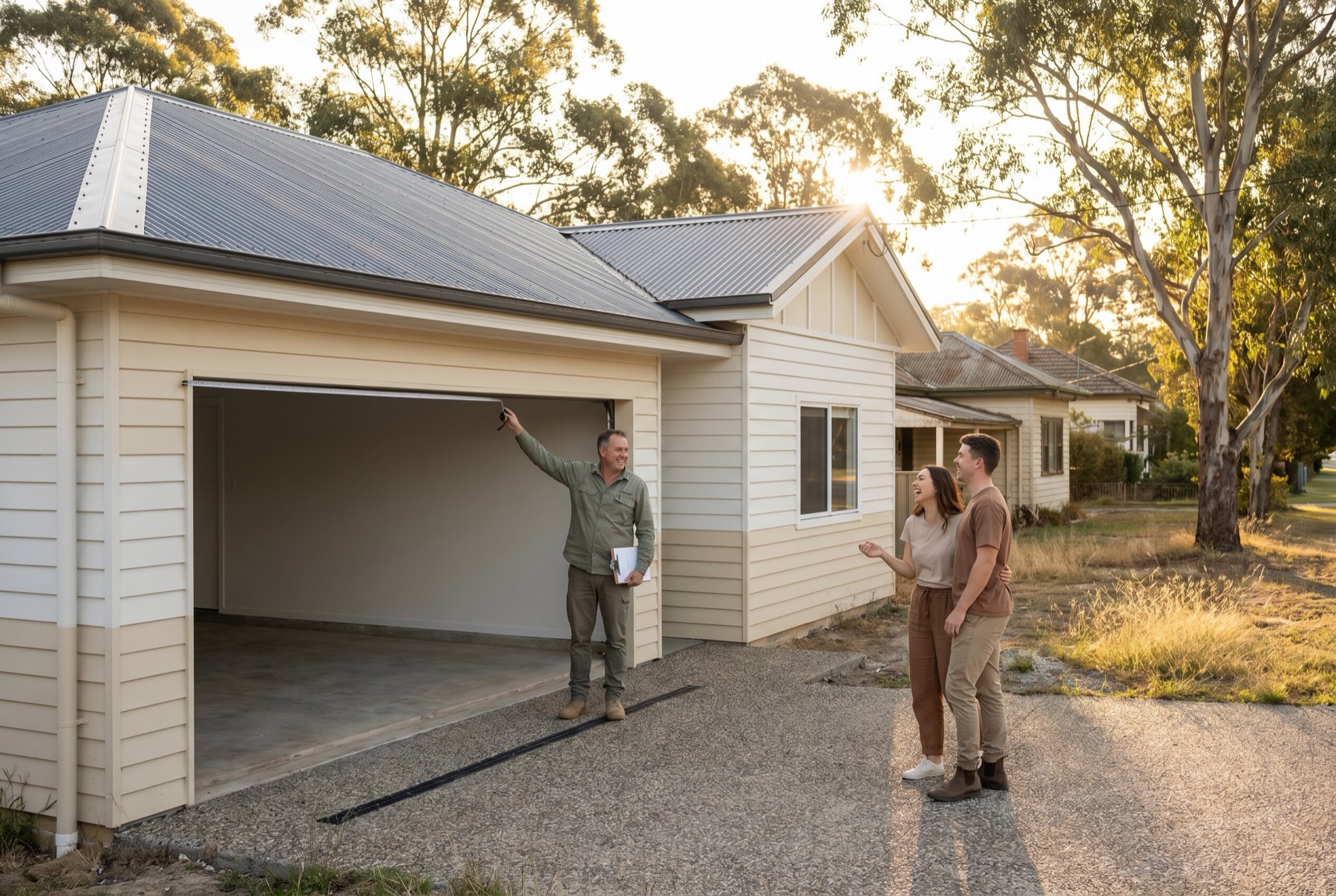
Both start the same way: we come and measure. Openings, headroom, side room, and what the garage is actually used for. Then we talk through the door types that genuinely suit, sectional, roller or tilt replacement, across the common Australian makes, and quote it plainly. The quote you get is the quote you pay.
The honest assessment
Our favourite booking, honestly. You're not sure if the door's dying or just dramatic. We come out, put a level on it, run it through its travel, look at the springs, rollers, rail and seal, and tell you which side of the line it's on: worth fixing, or worth replacing. Then it's your call, with no pressure either way.
If you'd like a feel for the answer before we come, try the which-side-of-the-line tool on the front page.